
Federal Copyright Registration
Secure official ownership and legal protection for your creative works, software, and content.
- Official Legal Record: Establish public proof of ownership with the U.S. Copyright Office.
- Litigation Eligibility: Unlock federal lawsuit rights and statutory damages for infringement.
- Deposit Copy Filing: Professional submission of work descriptions and deposit copies.
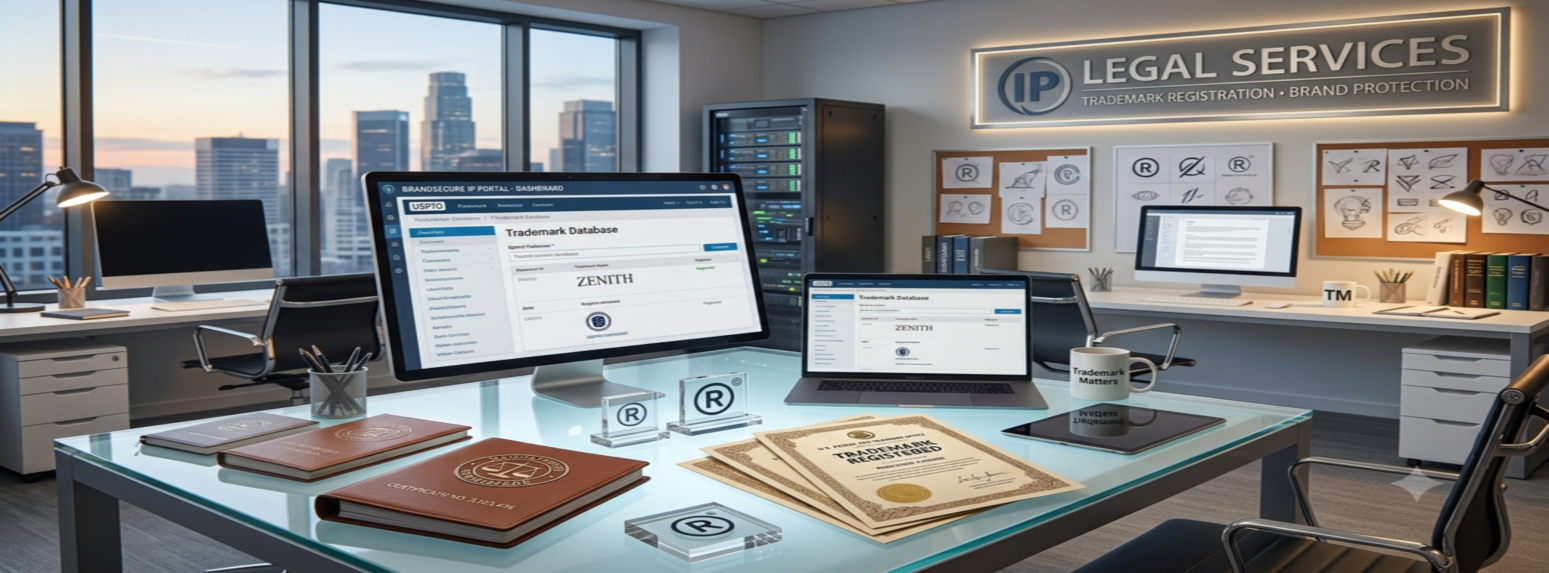
Why Secure Federal Copyright Registration?
While copyright exists upon creation, federal registration provides essential legal enforcement power.
Required for Federal Lawsuits
You cannot sue unauthorized copiers in U.S. federal court without an official copyright registration.
Claim Up to $150k in Damages
Timely registration qualifies you for statutory damages up to $150,000 per infringement plus legal fees.
Customs Import Protection
Record your copyright with U.S. Customs to seize counterfeit goods at the border.
Protecting Original Works
From literary works, software code, and graphic designs to digital media, official copyright registration shields your creative output from unauthorized copying and distribution. It establishes an indisputable public record of ownership, deters potential infringers, and empowers you to legally enforce your rights and claim monetary damages.
Registering within 3 months of publication entitles you to up to $150k in statutory damages plus legal fee recovery.

Copyright Office Deposit
Digital Asset Protection
Statutory Enforcement
Clear Packages, Complete Protection
Choose the level of legal support and filing expertise that matches your business goals.
Basic Package
Straightforward filing tools to get your application officially submitted.
- Federal Database Direct-Hit Search: We scan the USPTO registry to check your mark’s availability and flag immediate conflicts.
- Custom Legal Classification: Our team reviews the USPTO ID manual to precisely categorize your goods and services for maximum protection.
Standard Package
Step up to dedicated legal guidance and brand enforcement tools.
- 1-on-1 Attorney Consultation: Speak directly with a licensed trademark lawyer in a focused 15-minute session to resolve specific questions and outline your filing strategy.
- Cease & Desist Safeguards: Enforceable legal documents to act quickly against brand infringement.
Premium Package
Priority rush filing paired with continuous brand monitoring.
- 1-Hour Attorney Session: In-depth legal planning with a trademark lawyer.
- 48-Hour Priority Processing: Fast-track filing to secure your official USPTO date immediately.
- Infringement Alerts: Ongoing monitoring to protect your registered mark from copycats.
Maximum Legal Defense for Creative Works
Frequently Asked Questions
Federal copyright registration creates an official public record of ownership with the U.S. Copyright Office, granting the creator exclusive legal rights to reproduce, distribute, perform, and display their original work.
Copyright covers original literary works, software source code, visual arts, graphic designs, photography, musical compositions, sound recordings, architectural designs, and dramatic works.
Trademarks protect brand identifiers like logos, business names, and slogans used in commerce. Copyrights protect original creative, artistic, literary, or intellectual expressions fixed in a tangible medium.
While basic copyright protection begins the moment a work is created, official registration is a mandatory legal prerequisite for filing an infringement lawsuit in U.S. federal court and recovering statutory damages.
Statutory damages allow copyright owners who register before infringement (or within 3 months of publication) to recover up to $150,000 per willful violation without needing to prove actual financial loss.
For individual creators, copyright lasts for the author's lifetime plus 70 years. For works made for hire or corporations, protection lasts 95 years from publication or 120 years from creation, whichever is shorter.
A deposit copy is a complete visual, physical, or digital copy of the work being registered (such as a PDF manuscript, image file, or digital audio file) submitted to the U.S. Copyright Office.
Yes. Source code, object code, user interface designs, and app documentation can be registered as literary/visual works with the U.S. Copyright Office to protect against code duplication.
Processing times vary depending on examination backlog, but digital filings with online deposit uploads typically take between 2 to 6 months to receive an official Certificate of Registration.
We ensure your application, title classification, authorship claims, and deposit materials strictly adhere to U.S. Copyright Office requirements, eliminating processing delays and errors.